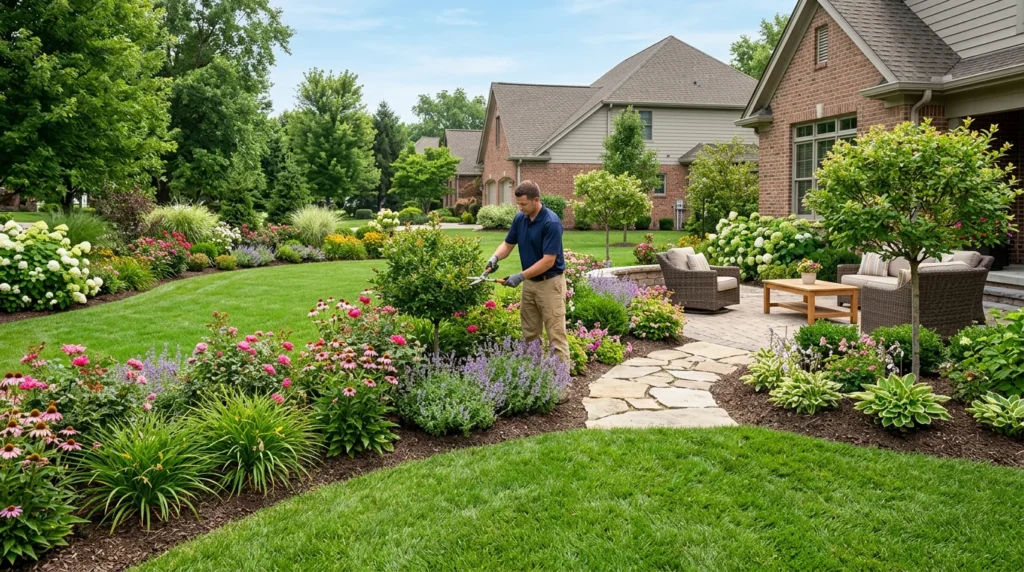
Quick answer: Landscaping design covers planning how your yard will look and function—layout, plant selection, grading and drainage ideas, hardscape concepts, and a practical installation plan. Maintenance is the ongoing care that keeps it healthy: mowing, edging, pruning, weeding, fertilizing, mulch refreshes, seasonal cleanups, and monitoring irrigation and plant health. Many homeowners combine both so the original design keeps working as plants mature.
What Design Usually Covers
Landscaping design is the “big picture” plan for how your outdoor space should look, feel, and function. A good design starts with how you use the yard—play space, pets, entertaining, privacy, shade, or low-maintenance goals—then translates that into a layout that fits the site conditions.
Most design work includes a site check (sun and shade patterns, slopes, drainage trouble spots, and soil conditions), then a plan for beds, lawn areas, trees and shrubs, and any hardscape like walkways, patios, edging, or retaining walls. Plant choices should match your light and moisture levels, mature size, and how much upkeep you want. If you’re hiring help, it’s common to bundle design with ongoing care through landscaping design and maintenance so the plan doesn’t fall apart after the first season.
Design also includes “future-proofing” details people forget: leaving room for shrubs to reach mature width, keeping plants away from siding for airflow, planning access for mowing, and choosing materials that won’t heave or wash out on a slope.
What Maintenance Typically Includes
Maintenance is the routine work that keeps the landscape tidy and plants thriving. For lawns, that usually means mowing, edging, trimming around obstacles, and managing weeds. For beds, it often includes hand weeding, mulching, pruning, and keeping bed lines crisp so turf doesn’t creep in.
Plant health care can include seasonal fertilizing, monitoring for pests and disease, and adjusting watering. Irrigation checks are a big part of this—misaligned sprinkler heads, clogged nozzles, or broken drip lines can quietly waste water and stress plants. Seasonal cleanups are also common: spring bed cleanout and cutbacks, fall leaf removal, and winter prep like protecting tender plants or preventing salt damage near sidewalks and driveways.
Good maintenance follows plant timing. Pruning at the wrong time can reduce blooms for a year, and cutting perennials too early can expose crowns to late freezes. A maintenance plan should match your specific plant list, not a one-size-fits-all schedule.
How To Tell If You Need Design, Maintenance, Or Both
You likely need design help if water pools after rain, the yard feels awkward to use, plants keep failing in the same spots, or you’re ready to add features like a patio, new beds, or privacy screening. Design is also smart before major planting so you don’t pay twice to move things later.
You likely need maintenance help if weeds and overgrowth return faster than you can keep up, shrubs are swallowing windows or walkways, mulch and bed edges disappear each season, or the lawn looks uneven because mowing height and timing aren’t consistent.
Many homeowners benefit from both: a clear plan plus steady upkeep. Design sets the direction, and maintenance protects the investment by keeping plants healthy as they establish and mature.
If you want a yard that looks good without constant trial-and-error, White Oak Tree Company can help you put a workable plan in place and keep it maintained through the seasons.