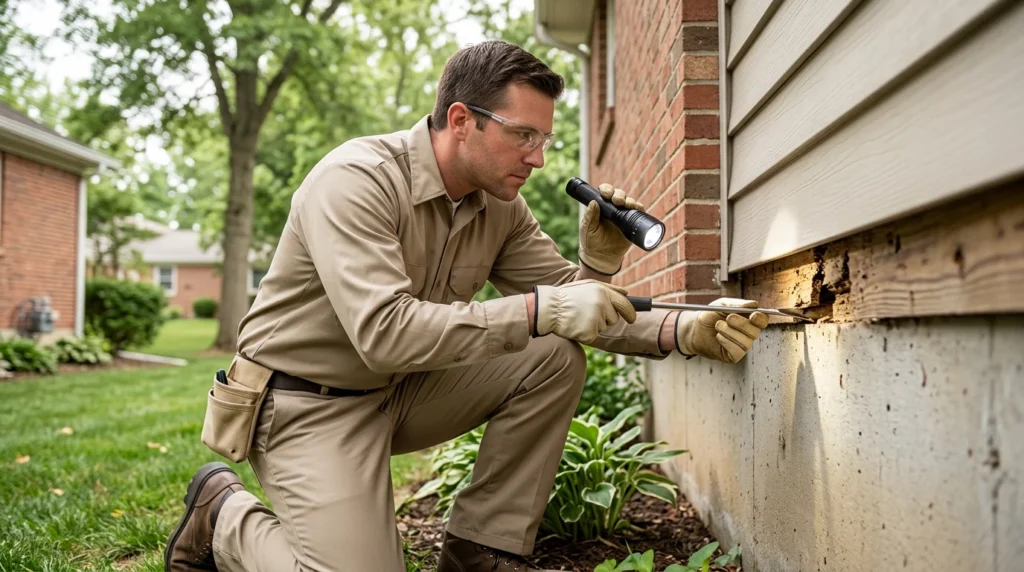
Quick answer: A termite inspection is a structured check of your home for active termites, past activity, and conditions that attract them—especially moisture and wood-to-soil contact. The inspector examines accessible wood, crawlspaces, basements, garages, and exterior foundation lines, then documents any evidence like mud tubes, damaged wood, or swarm signs. You can prepare by clearing access to key areas and sharing any recent leaks or renovations.
What An Inspector Looks For
A good inspection focuses on evidence, not guesswork. Inspectors look for mud tubes on foundations or piers, wood that sounds hollow when tapped, blistered paint that can mimic water damage, and frass (pellet-like droppings) that can point to drywood activity. They also watch for “swarmers” (winged termites) and discarded wings near windowsills, doors, and light fixtures.
Many inspections include a close look at the exterior perimeter, then the interior where access allows—crawlspace, basement, garage, and around plumbing penetrations. If you’re comparing termite inspection services, ask whether the visit also includes noting risk conditions like wood-to-soil contact, earth-filled porches, mulch piled against siding, and chronic moisture that keeps wood damp enough for termites to thrive.
You’ll usually receive a written summary of findings and recommendations. If evidence is found, the next step is often confirming the termite type and mapping likely entry points so any treatment can target the right areas.
What To Expect During The Visit
Most termite inspections follow a similar flow so nothing gets missed. A typical step-by-step looks like this:
1) Arrival and a few questions about any leaks, renovations, or past termite history. 2) Exterior pass along the foundation, porches, decks, and any wood-to-soil contact points. 3) Interior checks in accessible areas, often including garages, basements, utility rooms, and around plumbing. 4) Crawlspace or attic inspection if safely accessible, focusing on sills, joists, piers, and moisture conditions. 5) Documentation of findings (notes/photos in many cases) and a written report. 6) Time for Q&A so you understand what was found and what to do next.
Inspectors typically won’t move heavy storage, dismantle shelving, cut drywall, pull up flooring, or drill into finished surfaces during a standard inspection. They also generally won’t enter crawlspaces that are unsafe due to standing water, low clearance, exposed wiring, or suspected mold or structural hazards; in those cases, they may recommend improving access or safety first.
How To Prepare Your Home Before The Appointment
Access is the biggest difference between a quick visual scan and a thorough inspection. Clear a path to the crawlspace door or attic access, move stored items away from foundation walls in the garage or basement, and unlock gates so the exterior perimeter can be checked.
If you have a crawlspace, try to keep it reachable: move boxes away from the opening and let the inspector know if the space is unusually tight or has standing water. Inside, don’t worry about tidying every room—just make sure the inspector can reach baseboards in key areas and can see around plumbing under sinks if needed.
Share any clues you’ve noticed, even if they seem minor: a recent plumbing leak, sagging floors, bubbling paint, swarms you saw after rain, or a spot you patched with new wood. That context helps the inspector focus on the most likely trouble zones.
Regional Risk Context In Athens, GA And What It Means
As general regional context, North Georgia’s warm seasons and frequent humidity can support termite activity for long stretches of the year, especially for subterranean termites that travel through soil and rely on moisture. That’s why inspections in this region often pay extra attention to the foundation line, crawlspaces, and any place wood meets or sits close to soil—deck posts, porch steps, and older landscape timbers.
Practical local cues that can raise risk (without proving termites are present) include crawlspaces that stay damp after rain, downspouts that discharge right at the foundation, soil or mulch built up against siding, and shaded areas where the ground stays wet. Not every “bad sign” means you have active termites: old mud tubes can remain after a previous issue, and moisture damage can resemble insect damage at first glance. A careful inspection separates these by checking for fresh activity, intact tubes connected to soil, and the characteristic pattern of wood fiber damage.
If you want local help in Athens, Athens Exterminating can walk you through the inspection findings and the next practical steps.