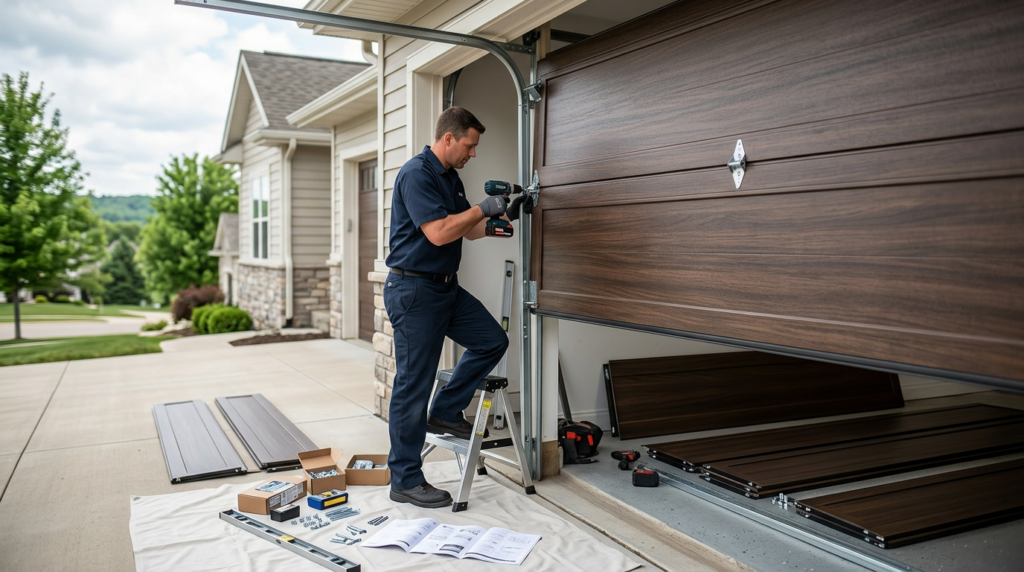
Quick answer: Choose a garage door company by looking for safe work practices, clear diagnostics, and parts matched to your specific door. A solid pro will check door balance, track condition, cables, rollers, and opener safety settings, then provide a written scope before starting. Vet them with proof of insurance, a real local service area, and consistent recent reviews that mention communication and follow-through.
What A Good Garage Door Visit Should Look Like
A solid service call starts with a quick safety check: the tech should look at spring condition (gaps, rust, stretched coils), cable fraying, roller wear, loose hinges, and track alignment before touching adjustments. They should also confirm the opener is matched to the door and that the door is properly balanced by hand with the opener disconnected.
You should hear a plain explanation of the failure and the fix. For example, a door that slams down or won’t stay halfway open often points to a spring issue, while a door that binds or jerks can involve rollers, track alignment, or a bent hinge. If you’re comparing options locally, start with a garage door company Baldwin WI that will walk you through what they’re seeing and show you the worn part before replacing anything.
Expect a clear scope in writing: what parts are being replaced, what is being adjusted, and what will be tested afterward (balance, force settings, photo-eyes, and reversal). For spring work, ask them to measure and match springs to door weight and drum/track setup rather than guessing.
What To Do Right Now If Your Door Won’t Work
If the door is stuck closed: leave it closed if possible. A loud bang from the garage, a visible gap in a torsion spring above the door, or a hanging cable are common signs of a broken spring or lift issue. Stop using the opener—repeated attempts can strip gears, bend the top section, or pull the door crooked in the tracks.
If the door is stuck open: keep people and pets away from the opening and don’t try to “muscle it down” if it feels unusually heavy or uneven. If you must secure the opening, many homeowners use temporary measures like locking interior doors to the garage and moving valuables out of view while waiting for service.
DIY safety line: avoid adjusting torsion springs, winding cones, or bottom brackets yourself. Those parts are under high tension and can cause serious injury. Simple, lower-risk checks you can do are clearing photo-eye obstructions, confirming the opener is plugged in, and looking for obvious track blockage—then stop if the door binds, tilts, or feels heavy.
Baldwin, WI Vetting Checklist Before You Schedule
Ask for proof of liability insurance and workers’ compensation coverage. You don’t need to be an expert—just request the certificate and confirm it’s current. Also ask whether a permit is required for your situation; many basic repairs don’t need one, but some electrical changes (like adding a new outlet or hardwiring) or structural modifications can trigger permit questions.
Confirm they have a physical business address and that Baldwin is within their normal service area. That helps with accountability if you need follow-up service or warranty work. If they only provide a generic phone number and won’t state where they’re based, treat that as a caution sign.
Use local reviews carefully: look for patterns (same complaint repeated), recency (comments from the last several months), and response behavior (do they address issues calmly and offer a path to resolution). One bad review isn’t decisive; a consistent theme about missed appointments, unclear pricing, or repeat breakdowns is more meaningful.
Red Flags, Repair-vs-Replace Clues, And What To Ask
Garage doors are heavy, and spring systems store a lot of energy. A major red flag is anyone who downplays spring safety or tries to sell a “quick tightening” without checking the full lift system. Another red flag is refusing to explain the diagnosis in plain terms or skipping basic tests like manual balance and safety reversal.
On two-spring systems, many pros recommend replacing both springs if the pair is the same age and cycle rating, since they often wear together and mismatched lift can stress cables and drums. Ask them to measure the door and match the spring size to the door weight and hardware, then show you what they’re replacing and why.
Repairs usually make sense when the door is structurally sound and the issue is limited to wear parts (springs, cables, rollers, hinges, bearings, sensors, or an opener gear kit). Replacement moves up the list if panels are cracked/rotted, tracks are badly bent, the door is repeatedly coming off-track, or the opener is consistently undersized for the door. A practical next step is to call 2–3 companies, ask the questions above, and choose the one that provides a written scope, shows measurements, and confirms post-repair safety tests.